Driver recruiting for a small trucking company is defined as the process of identifying, attracting, qualifying, and onboarding CDL drivers who meet your specific route, endorsement, and compliance requirements. Small fleets compete directly with large carriers for the same shrinking labor pool, and cost-per-hire rose 24% in 2025. That increase means you cannot afford a slow or vague hiring process. The fleets winning today combine precise role definitions, competitive pay structures, fast lead response, and airtight DOT compliance from day one.
Effective driver recruiting starts with knowing exactly what you need before you post a single job ad. Indeed’s 2026 guidance confirms that starting with a precise definition of the role reduces hiring mismatches and improves candidate quality. A vague posting like “CDL driver needed” attracts unqualified applicants and wastes your time screening them out.
Your first step is to define the route type and required endorsements. Long-haul drivers operate under different hours-of-service rules than regional or local drivers. A driver hauling hazardous materials needs a hazmat endorsement. A tanker route requires a tanker endorsement. Posting the wrong requirements costs you qualified candidates and attracts the wrong ones.

The table below shows the most common driver types, their typical route structures, and the endorsements you should list in your job posting.
| Driver type | Typical route | Common endorsements required |
|---|---|---|
| Long-haul OTR | Interstate, 500+ miles | None required, but doubles/triples common |
| Regional | Multi-state, home weekly | Hazmat, tanker depending on freight |
| Local/dedicated | Same-day, city or metro | Air brakes, doubles for some accounts |
| Specialized | Flatbed, tanker, hazmat | Hazmat, tanker, oversize permits |
Pro Tip: List the specific endorsements in the job title itself, not just the description. “CDL-A Driver, Hazmat Required” filters applicants before they click, saving you screening time.
Platforms like Indeed, Trucking Truth, and CDLjobs.com each serve different driver demographics. Indeed reaches the broadest audience. Niche boards like CDLjobs.com attract drivers actively looking to switch carriers. Use both for small fleet hiring to maximize reach without inflating your budget.
Pay is the first filter a driver applies to any job posting. Indeed recommends reviewing pay benchmarks regularly and explaining clearly how drivers can qualify for extra earnings. Posting a rate below the regional average guarantees low application volume, regardless of how good your company culture is.
Sign-on bonuses, safety bonuses, and retention incentives each serve a different purpose. A sign-on bonus gets attention. A safety bonus rewards behavior you already want. A retention bonus at 6 or 12 months reduces the turnover that forces you back into recruiting mode. Use all three together for the strongest effect.
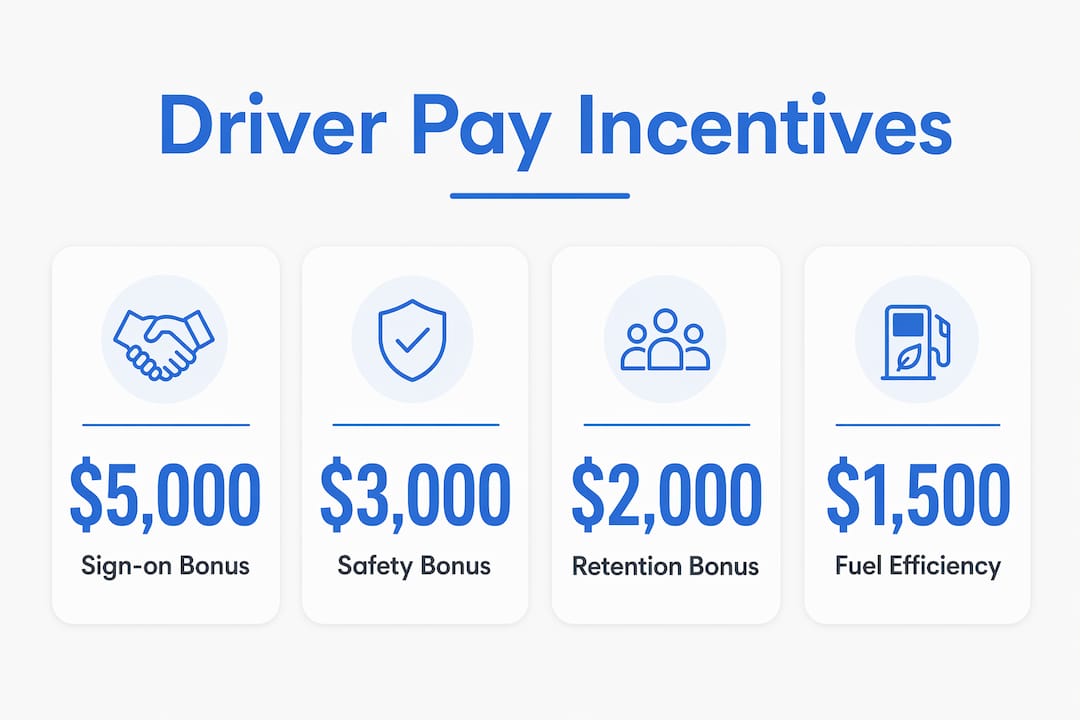
Transparent pay structures matter as much as the numbers themselves. Drivers talk to each other. If your pay structure is confusing or feels like it hides deductions, word spreads fast. Lay out exactly how pay is calculated, what bonuses are available, and when they pay out.
Effective incentive structures for small fleets include:
Pro Tip: Post your pay range and bonus structure directly in the job ad. Drivers skip postings that say “competitive pay” without numbers. Specificity builds trust before the first phone call.
Lead conversion through fast, consistent follow-up is the key recruiting advantage in 2026, not increasing lead volume. A driver who applies to five carriers at once will accept the first reasonable offer. If you take 48 hours to respond, you lose that candidate to a carrier that called within the hour.
Speed is a competitive lever that small fleets can actually use against large carriers. Large companies have bureaucratic hiring processes. You can call a driver back in 20 minutes. That responsiveness signals operational competence and respect for the driver’s time.
AI tools like Lead Assist 3.0 automate initial candidate engagement, sending a text or email response within minutes of an application. That first contact keeps the driver engaged while you review the application. It does not replace the human follow-up call, but it prevents the lead from going cold before you get to it.
A fast-track recruiting funnel for small fleets works in five steps:
Panic hiring and inefficient onboarding increase compliance risks and cause candidate dropoff. Building this funnel before you need a driver means you execute it under pressure without cutting corners.
DOT pre-employment compliance is not optional. The full pre-employment checklist includes a drug test, motor vehicle record (MVR) check, FMCSA Drug and Alcohol Clearinghouse query, medical certificate verification, and a completed DOT application covering 10 years of employment history. Missing any one of these steps exposes your company to fines and audit failures.
The FMCSA Clearinghouse query is required before every new hire. Skipping it is one of the most common compliance violations small carriers face during audits.
Pre-employment drug test clearance and Clearinghouse consent are the two most common bottlenecks, often adding 3–7 days to your timeline. Schedule the drug test the same day you receive the completed application. Send the Clearinghouse consent form digitally so the driver can sign it from their phone.
The table below summarizes the required documents, the governing regulation, and the retention timeline every small fleet must follow.
| Document | Regulation | Retention period |
|---|---|---|
| DOT application (10-year history) | 49 CFR 391.21 | 3 years |
| MVR check | 49 CFR 391.23 | 3 years |
| Clearinghouse query | 49 CFR 382.701 | 3 years |
| Pre-employment drug test result | 49 CFR 382.301 | 5 years |
| Medical examiner’s certificate | 49 CFR 391.43 | Duration of employment + 3 years |
| Road test certificate | 49 CFR 391.31 | Duration of employment + 3 years |
Treat the driver qualification file as an auditable evidence system with step-by-step checklists, not just a folder of paperwork. A checklist approach means any staff member can complete the process correctly and you can prove compliance during a DOT audit. Use the 2026 compliance audit checklist to verify your DQ file structure meets current FMCSA standards.
Pro Tip: Create a digital DQ file folder for each driver the day they apply. Add documents as they arrive. By the time you are ready to dispatch, the file is complete and audit-ready.
Standard onboarding for small fleets takes 3–5 business days and covers screening, orientation, equipment familiarization, and a supervised road test before solo dispatch. That timeline is tight. Every unnecessary delay costs you a driver who may accept another offer while waiting.
Treat the first 30–90 days as an extension of recruiting, not a separate process. Scheduled check-ins at 30, 60, and 90 days give you early warning on dissatisfaction before it becomes a resignation. They also signal to the driver that you pay attention, which is rarer than it should be in this industry.
Drivers recruit others by sharing their operational experience with other CDL holders. A driver who gets paid accurately, dispatched efficiently, and treated respectfully will tell two or three colleagues. That word-of-mouth is more credible than any job posting you can write.
Common onboarding pitfalls that damage retention and recruiting reputation:
Reducing non-earning time in the first 90 days is one of the highest-impact retention moves a small fleet can make. Drivers leave when they feel like they are working without getting paid. Fix that early and you cut re-hiring costs significantly. Goeldhub’s resources on reducing driver turnover offer additional tactics for keeping drivers past the 90-day mark.
Effective driver recruiting for small trucking companies requires precise role definitions, competitive pay, fast lead response, rigorous DOT compliance, and structured onboarding that extends through the first 90 days.
| Point | Details |
|---|---|
| Define the role precisely | Specify route type and required endorsements before posting to cut unqualified applicants. |
| Pay transparency wins candidates | Post actual pay ranges and bonus structures in the job ad to build trust upfront. |
| Speed beats volume | Respond to leads within one hour. Fast follow-up converts more candidates than more job postings. |
| Compliance is non-negotiable | Complete all six DOT pre-employment steps before dispatch to avoid fines and audit failures. |
| Onboarding is still recruiting | Use 30, 60, and 90-day check-ins to reduce turnover and build word-of-mouth referrals. |
The biggest mistake I see small fleet owners make is treating recruiting as a separate activity from operations. You post a job when you need a driver, rush through screening, skip a compliance step under pressure, and end up with a problem hire or a DOT violation. That cycle is expensive and avoidable.
The fleets that recruit well do not have bigger budgets. They have better processes. They know exactly what driver they need before they post. They call candidates back fast. They build a DQ file that is audit-ready from day one. And they check in with new drivers at 30, 60, and 90 days instead of waiting for a resignation to find out something was wrong.
The other thing I would push back on is the idea that small fleets cannot compete with large carriers on pay. You often cannot match a mega-carrier’s base rate. But you can offer home time, consistent lanes, direct communication with ownership, and a referral bonus structure that large carriers cannot replicate. Those things matter to experienced drivers who are tired of being a number at a 5,000-truck operation.
Recruiting reputation compounds over time. Every driver you treat well becomes a potential referral source. Every driver you lose to a bad onboarding experience tells others. The operational competence you build today is your best long-term recruiting asset.
— Managment
Running a compliant hiring process while managing daily dispatch is a real workload for a small fleet. Goeldhub’s CDL driver placement services connect small carriers with qualified CDL drivers, cutting the time you spend sourcing and screening candidates from scratch.
Goeldhub also provides FMCSA-compliant ELD solutions that support driver log management, hours-of-service tracking, and compliance documentation from day one of a new hire’s tenure. The platform supports existing hardware including PT-30 and IOSix devices, so you do not need to replace equipment when you add a driver. At $15 per driver per month, you get ELD compliance, fuel card discounts, and operational tools built for fleets your size. A 14-day free trial is available with no obligation.
DOT regulations require a completed application, MVR check, FMCSA Clearinghouse query, pre-employment drug test, medical certificate, and a road test certificate before a driver operates commercially. Missing any document creates audit liability under 49 CFR Part 391.
Contact applicants within one hour of receiving an application. Fast lead response is a direct competitive advantage because most drivers apply to multiple carriers simultaneously and accept the first reasonable offer.
Sign-on bonuses, safety bonuses, fuel efficiency bonuses, and referral bonuses each address a different driver motivation. Posting the specific amounts in the job ad increases application volume compared to vague “competitive pay” language.
Standard onboarding takes 3–5 business days and includes screening, orientation, equipment familiarization, and a supervised road test. Scheduling the drug test and sending consent forms digitally on the day of application reduces that timeline.
Unaddressed non-earning time, delayed first paychecks, and lack of check-ins are the leading causes of early turnover. Scheduled 30, 60, and 90-day check-ins catch dissatisfaction before it becomes a resignation.


.svg)