Owner-operator trucking is a business model where a driver owns or leases their truck and operates as an independent business, managing everything from load sourcing to compliance and maintenance. Unlike a company driver who collects a paycheck and hands off administrative responsibilities, an owner-operator runs a small business that happens to move freight. That distinction matters more than most people realize before they make the leap. You control your schedule, your rates, and your future. You also own every problem that comes with the truck.
The three most common structures in owner-operator trucking explained simply are: leasing on to a carrier under their authority, operating under your own USDOT and MC numbers, and running power-only arrangements where you supply the tractor and the customer supplies the trailer. Each model carries a different risk profile, startup cost, and compliance burden. Understanding which one fits your situation is the first real decision you will make as an owner-operator.
Operating under own authority shifts full compliance and insurance responsibility to the owner-operator. That is the clearest way to separate the three models. Here is how each one works in practice.

You operate under a carrier’s existing DOT and MC authority. The carrier handles most regulatory filings, safety audits, and insurance requirements. You focus on driving and load execution. The tradeoff is less control over rates and load selection. This model suits drivers who want to test owner-operator life without taking on the full administrative stack from day one.
Own authority increases your paperwork and risk but allows stronger rate negotiation and full operational control. You register your own USDOT and MC numbers with the FMCSA, carry your own insurance, and manage every compliance task yourself. The startup cost is higher and the learning curve is steeper, but the earning ceiling is also higher because you negotiate directly with shippers and brokers.
Power-only trucking lowers upfront trailer costs but requires careful schedule and load management to avoid deadhead miles and lost earnings. You bring the tractor. The shipper or broker provides the trailer. Pay in this model typically runs $1.50 to $3.00 per mile depending on freight type and region. That range reflects how much scheduling discipline matters. An owner-operator who fills their calendar with back-to-back loads earns at the top of that range. One who runs empty between jobs earns far less.
Pro Tip: If you are new to owner-operator trucking, start with the lease-on model for 12 to 18 months. You will learn compliance rhythms, load sourcing, and expense management without carrying the full regulatory burden of own authority.
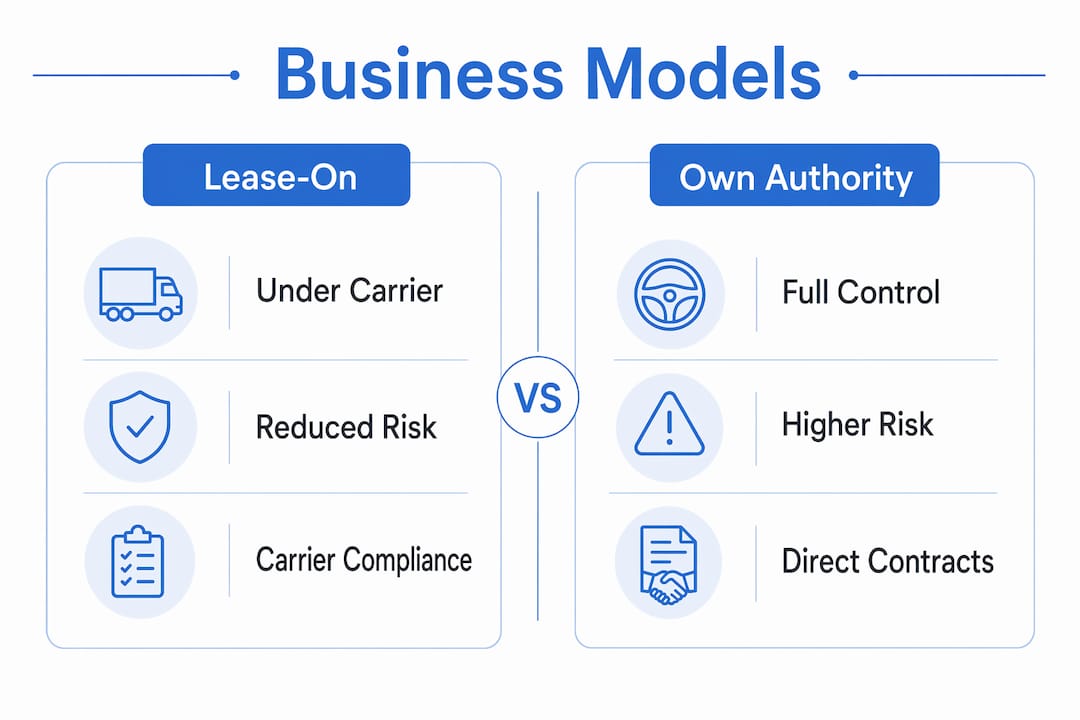
| Model | Authority | Insurance responsibility | Best for |
|---|---|---|---|
| Lease-on | Carrier’s DOT/MC | Carrier handles primary | New owner-operators |
| Own authority | Your USDOT/MC | You carry all coverage | Experienced operators |
| Power-only | Varies by arrangement | Depends on agreement | Flexibility seekers |
Typical revenue models for owner-operators include flat rate, percentage of load revenue, or mileage-based pay, influenced by operating authority and load sourcing. Each structure has a different risk and reward profile.
The revenue side is only half the equation. Owner-operators face expenses including fuel, insurance, maintenance, permits, and downtime which directly impact cash flow and profitability. Fuel alone typically represents 25 to 35 percent of gross revenue for a solo operator. That number makes fuel cost control one of the highest-leverage activities in your business.
Deadhead miles are the silent profit killer. Every mile you drive without a paying load costs you fuel, time, and wear on the truck with zero revenue to offset it. Experienced owner-operators plan their load sequences to minimize empty miles, often accepting slightly lower-paying loads that position them for a better-paying return run.
Pro Tip: Track every expense in a dedicated business account from day one. Mixing personal and business finances makes tax preparation harder and obscures whether your operation is actually profitable.
Regulatory compliance is where many new owner-operators underestimate the workload. The requirements differ significantly depending on whether you lease on to a carrier or operate under your own authority.
Operating authority and FMCSA registration are the regulatory baseline for independent operations. If you run under own authority, you need a USDOT number, an MC number for interstate commerce, and proof of insurance filed with the FMCSA before you move a single load. The FMCSA also requires a BOC-3 filing, which designates a process agent in every state you operate in.
Key compliance obligations for own-authority operators include:
For ELD compliance specifically, the FMCSA mandates that most commercial drivers use an approved electronic logging device to record hours of service. Non-compliance can result in out-of-service orders that stop your revenue cold.
The classification question is one that catches many operators off guard. Motor carriers must balance compliance control and independent contractor status carefully to avoid lawsuits. If a carrier controls too many aspects of how you work, the IRS or a state labor agency may reclassify you as an employee, triggering back taxes and penalties for both parties.
“Good independent contractor agreements and forming LLCs protect carriers and owner-operators by clarifying business-to-business relationships and reducing misclassification risk.” Source: Trucking Info
Forming an LLC and maintaining a clear business-to-business contract with every carrier or broker you work with is the most practical defense against misclassification. Review your trucking compliance obligations annually as regulations update.
Getting started requires more than a CDL and a truck. Transitioning from company driver to owner-operator requires embracing additional workload beyond driving. Here is a practical sequence to follow.
Pro Tip: Before signing any lease-on agreement, read the settlement statement structure carefully. Some carrier lease programs charge back fuel, insurance, and administrative fees that significantly reduce your net pay. Know your true take-home before you commit.
Maintenance planning deserves its own focus. Cost-effective fleet maintenance practices reduce unplanned downtime, which is one of the most expensive events in an owner-operator’s calendar. A truck sitting in a shop is not earning revenue, and repair bills without a maintenance reserve can wipe out weeks of profit.
Owner-operator trucking is a viable and potentially lucrative career path, but it succeeds or fails on business discipline, not just driving skill.
| Point | Details |
|---|---|
| Business model choice matters | Lease-on reduces startup risk; own authority maximizes control and earning potential. |
| Expenses erode revenue fast | Fuel, insurance, and downtime can consume 60 to 70 percent of gross revenue without active cost management. |
| Compliance is non-negotiable | FMCSA registration, ELD compliance, and proper insurance are legal requirements, not optional steps. |
| LLC formation protects you | Forming an LLC and using business-to-business contracts reduces misclassification risk and legal exposure. |
| Load sourcing drives profitability | Minimizing deadhead miles and building broker relationships directly determines your net income. |
Most people who ask what owner-operator trucking means are really asking whether it is worth it. My honest answer is: it depends entirely on whether you are ready to run a business, not just drive a truck.
The drivers who struggle most are the ones who underestimate the compliance workload. FMCSA filings, ELD records, IFTA returns, safety audits. These tasks do not stop because you had a long week on the road. The ones who thrive treat compliance as a fixed cost of doing business and build systems to handle it without drama.
Cash flow is the other area where I see people get into trouble fast. A broker may take 30 to 45 days to pay an invoice. If your truck payment is due in two weeks, that gap hurts. Factoring solves this problem by advancing you most of the invoice value immediately, but it costs a percentage of each load. You need to factor that cost into your rate calculations before you accept a load, not after.
The upside is real. Owner-operators who build direct shipper relationships and manage their expenses well can earn significantly more than company drivers in the same lanes. The control over your schedule and your business is genuine. But it requires treating every mile like a business decision, not just a driving task.
Build relationships with other owner-operators in your region. Join forums, attend carrier events, and talk to people who are one or two years ahead of you. The practical knowledge you get from those conversations is worth more than any guide.
— Managment
Running a trucking business means juggling compliance, cash flow, and daily operations at the same time. Goeldhub is built to cut that burden for small and mid-sized operators.
With Goeldhub’s ELD compliance services, you get FMCSA-compliant electronic logging, driver log management, and support for existing hardware including PT-30 and IOSix devices. No need to replace equipment you already own. The platform also includes low-fee factoring to close the cash-flow gap between load delivery and invoice payment, plus fuel card programs with negotiated discounts that put money back on every fill-up. If you are just getting started, Goeldhub’s truck rental options let you get on the road without committing to full ownership. All of this runs at $15 per driver per month, with a 14-day free trial and multilingual US-based support.
An owner-operator is a truck driver who owns or leases their vehicle and operates as an independent business rather than as an employee of a carrier. They manage their own loads, expenses, compliance, and business relationships.
You need a valid CDL, a USDOT number and MC number if operating under own authority, FMCSA-compliant insurance, an approved ELD, and IFTA registration for interstate operations. Forming an LLC is strongly recommended to protect your personal assets.
Owner-operator pay varies widely based on model, freight type, and expense management. Power-only operators typically earn $1.50 to $3.00 per mile, while own-authority operators negotiating directly with shippers can earn more. However, gross revenue must cover all business expenses before comparing to a company driver’s net pay.
Lease-on means you operate under a carrier’s existing DOT and MC authority, with the carrier managing most compliance. Own authority means you hold your own USDOT and MC numbers, carry your own insurance, and handle all regulatory filings independently.
Owner-operators source freight through load boards like DAT and Truckstop.com, direct carrier contracts, freight brokers, and dispatch services. Building direct shipper relationships over time reduces reliance on spot market loads and improves rate consistency.


.svg)