Switching to an ELD and fleet management system often means retraining drivers, replacing hardware, or dealing with locked features that inflate costs for small fleets. Existing solutions frequently require new devices, bundle unwanted extras, and raise fees for add-ons like GPS or IFTA reporting long before a fleet grows. This guide compares price, hardware compatibility, and feature access across five providers so you can select an ELD and fleet management platform that fits your fleet size and workflow without hidden migration costs.
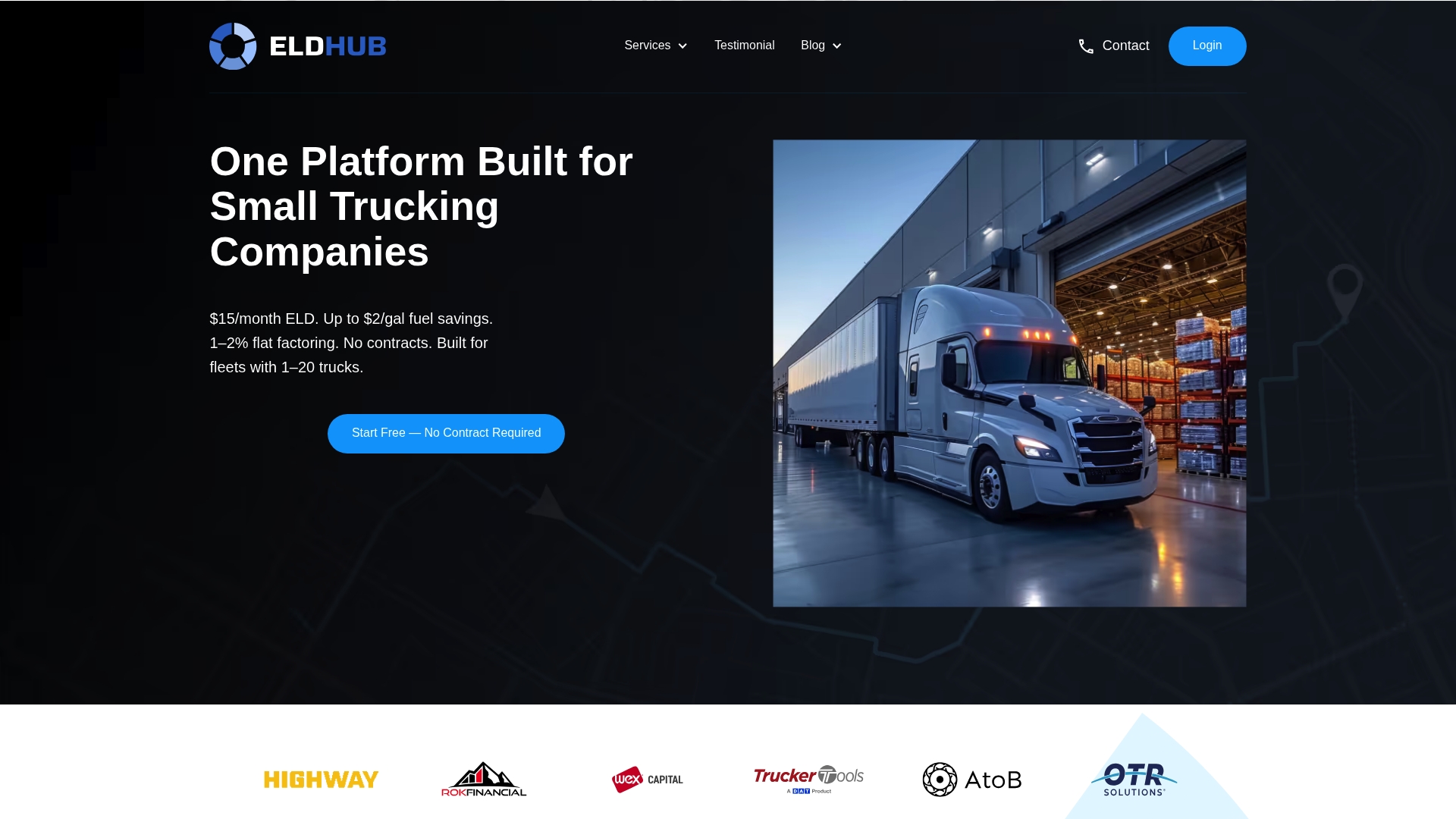
ELD Hub charges $15/month per driver for core ELD service and bundles fuel, factoring, and recruiting tools aimed at very small fleets. The vendor advertises fuel savings up to $2 per gallon at 4,200+ truck stops and factoring payouts within 24 hours; treat those figures as the company’s claims.
ELD Hub delivers FMCSA-compliant electronic logs, driver log management, and support that works with existing hardware. The platform supports PT-30 and IOSix devices so you can avoid swapping equipment and downtime.
It also pairs fuel discounts powered by AtoB, a flat factoring fee range, access to pre-vetted CDL drivers, freight market data, and tailored insurance options tied to driver behavior.
Built for one to twenty truck operations, ELD Hub combines compliance, fuel savings, and funding on a single bill without forcing a hardware change. That focus on very small fleets reduces the migration cost and the sales friction most enterprise products create.
ELD Hub fits owners and managers of very small trucking companies with one to twenty trucks who need low-cost ELD compliance plus pragmatic cost controls for fuel and factoring. It targets operators who prefer minimal tech churn and bundled vendor services.
The platform’s single most concrete advantage is the low per-driver fee paired with hardware compatibility. That combination changes the math for a one or two truck operator: you get compliant logs for the fleet without paying to retrofit devices or learning a complex new system.
A two-truck owner keeps PT-30 units, signs up for the 14-day trial, uses the fuel card at participating stops, and moves payroll timing with a factoring advance. The result is fewer admin headaches and more predictable cash flow during seasonal demand.
ELD Hub’s base ELD service is $15/month per driver. Fuel discounts, factoring fees reported in the product data, and insurance or recruiting services carry separate rates; the vendor does not publish a detailed tiered price sheet on the site.
Website: https://goeldhub.com
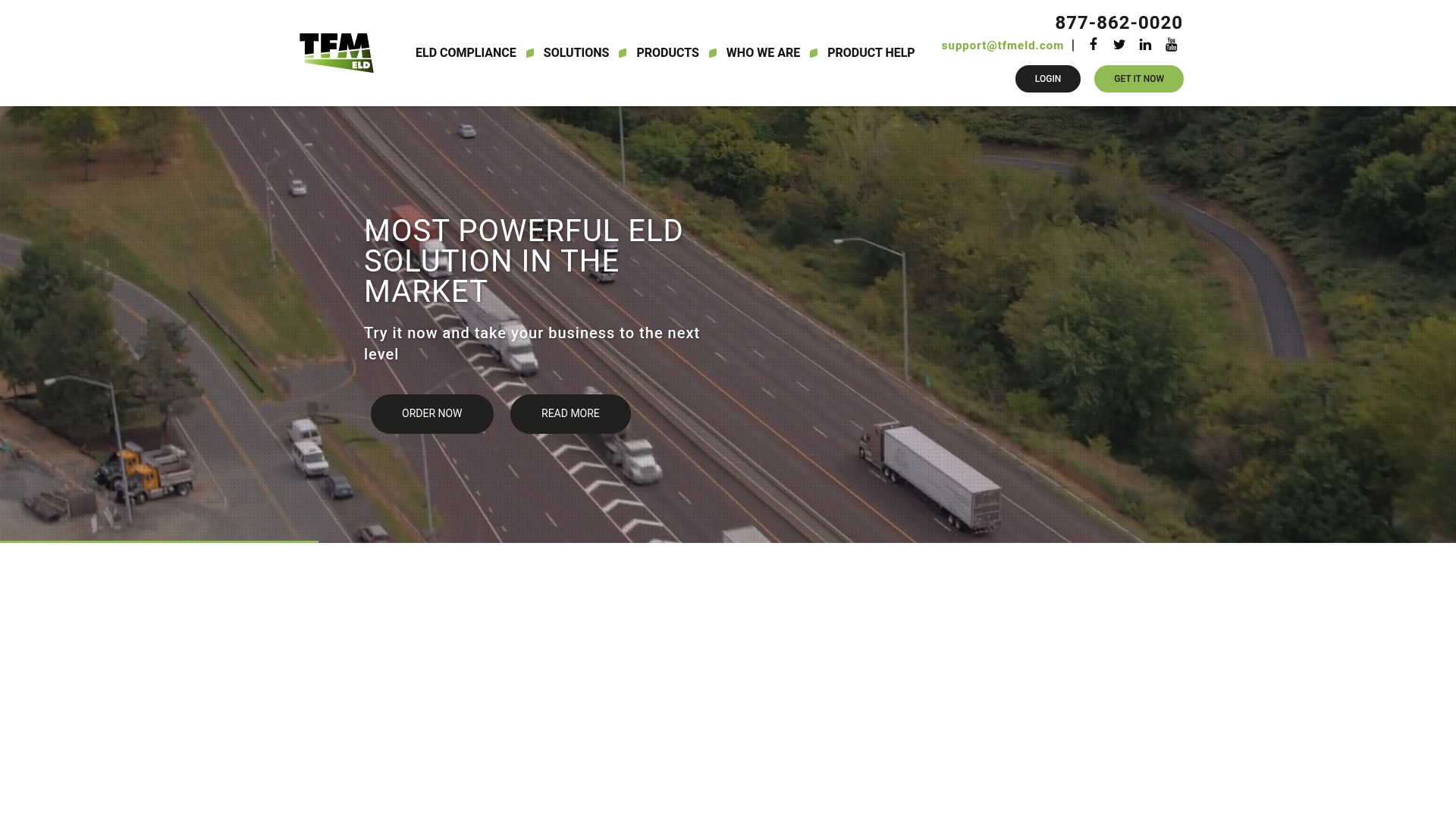
The vendor advertises a 30-day money-back guarantee plus 24/7 customer support, a reassuring safety net for small fleets testing new ELD systems. TFM ELD combines core HOS logging with add-on hardware like trailer trackers and dash cameras for operational visibility.
The vendor states it is FMCSA registered and certified, covering the regulatory baseline for HOS logging.
TFM ELD pairs the compliance claim above with a bundled fleet management toolbox so you do not need separate vendors for cameras, trailer tracking, and dispatch. That combined approach reduces hardware fragmentation for fleets that prefer a single supplier for ELD and peripherals.
Offers compliance plus fleet tools. You get ELD logging and optional trailer and asset trackers from one provider which simplifies hardware purchasing and warranty tracking.
Flexible no-contract options let smaller companies trial services without long commitments, helpful when replacing older devices or testing drivers on new routes.
High-accuracy GPS and real-time tracking improve theft prevention and load monitoring for teams that route multi-stop regional runs.
Covers U.S. and Canadian HOS rules, which helps cross-border regional carriers keep logs consistent across jurisdictions.
24/7 customer support and the 30-day refund window reduce deployment risk for operators who must stay compliant from day one.
Several buyer reviews indicate setup and integration can be complex when done without technical support, which raises initial deployment costs for smaller fleets.
Pricing detail beyond the headline plan is limited on the website, so expect add-on hardware and API work to add extra fees.
The vendor lists API integrations but provides little public detail on which third-party systems are supported or which connectors exist.
Website material focuses on features rather than usability examples or customer stories, leaving questions about day-to-day workflow clarity.
If you need a fully documented integration map for TMS, payroll, or accounting, TFM ELD’s public integration details are sparse and may slow IT approval. Teams with zero internal tech support should budget for onboarding help because reviewers report setup friction.
Small to mid-size trucking and logistics companies that want a single vendor for ELD compliance plus trailer and dash camera hardware. Good for regional fleets that cross the U.S. and Canada and prefer bundled hardware over sourcing pieces separately.
A regional fleet automates Hours of Service logging while adding trailer trackers to reduce theft. Dispatchers use real-time locations to tighten pickup windows and drivers get violation alerts that cut out manual log fixes, improving on-time delivery and lowering paper audit time.
The headline plan is the Pro Plan at $30/month billed monthly. The vendor lists an annual billing option available at the same price and does not publish extensive tier breakdowns or hardware fees on the site.
Website: https://tfmeld.com
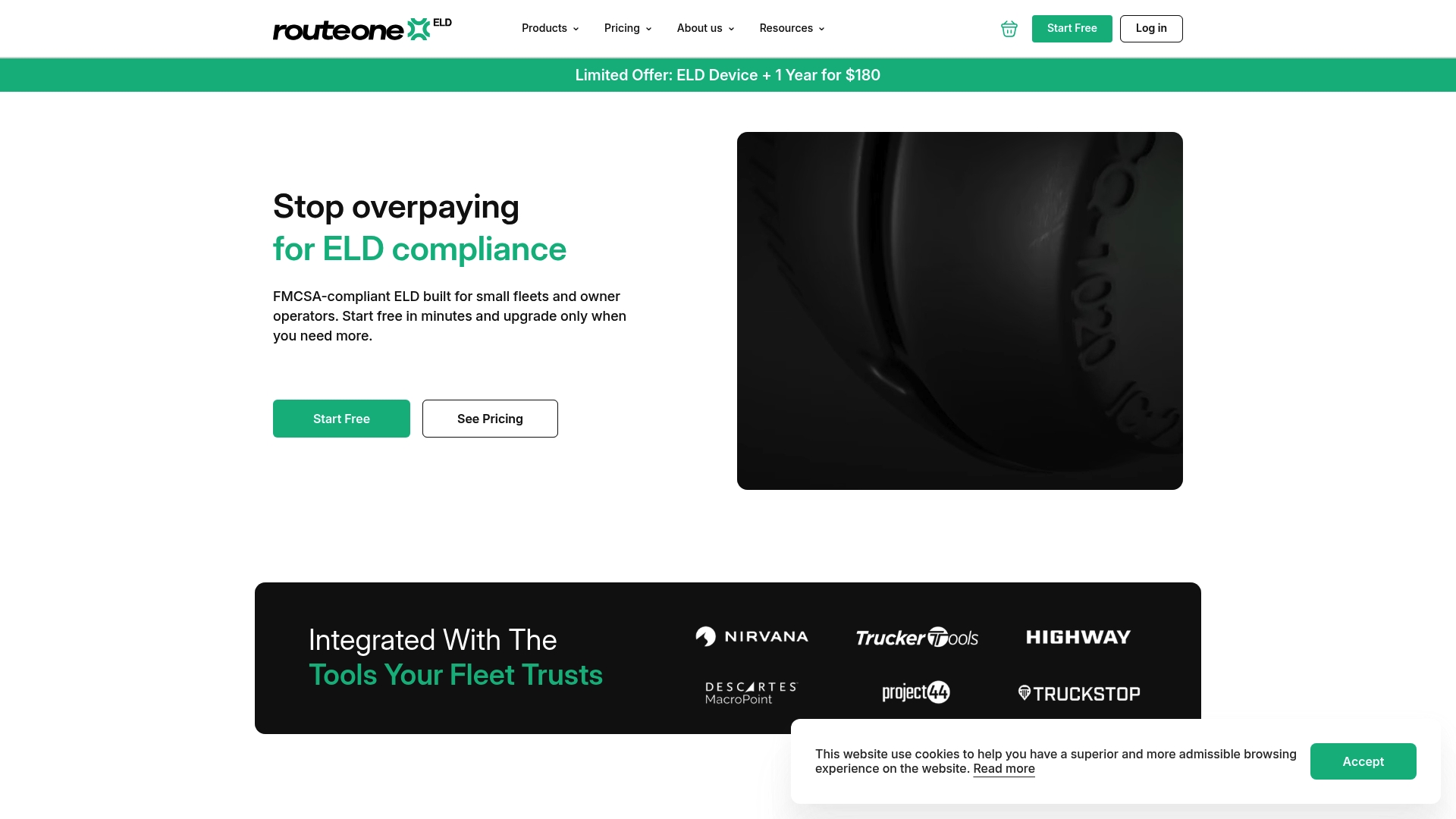
A free basic plan plus paid tiers that start at $7.99 per vehicle/month billed annually is RouteOne ELD’s most concrete appeal for cost-conscious fleets. The vendor reports a mid-range TrustScore around 3.5 to 3.7 on review aggregators, which signals mixed user experiences.
RouteOne ships the standard FMCSA tools: FMCSA-compliant ELD functionality, automatic Hours of Service tracking, and driver log management for routine compliance.
Vehicle inspection reports (DVIR), optional GPS tracking with real-time fleet monitoring, and higher-tier advanced reporting are available alongside multiple hardware choices and API access.
RouteOne ELD was founded by truckers and centers on affordability and straightforward upgrades with no long-term contracts. That positioning is practical: you can start on the free plan, add GPS bundles or reporting as you grow, and keep the same provider rather than rip and replace hardware.
Easy setup and day one usability. Fleets report quick onboarding and a short learning curve for drivers and dispatchers.
Flexible subscription mix including a no-cost entry point. The free plan removes the initial budget barrier for owner operators and very small fleets.
Built-in GPS and real-time visibility on paid tiers. For dispatch teams that need live locations, RouteOne provides that without forcing GPS on every vehicle.
Vendor claims trucker-founded design and responsive customer support. That practical origin shows up in workflow choices aimed at drivers and fleet managers.
The Trustpilot range above points to mixed satisfaction among users; some fleets encounter support or reliability issues.
Several advanced features and integrations require higher-tier subscriptions, so the free plan can feel limited for growing operations.
A handful of users report integration or support friction during rollout, which can extend implementation time for larger fleets.
If you need enterprise grade telematics and every integration unlocked on day one, RouteOne’s entry tiers may feel constrained. It is not built for nontrucking industries or international regulatory regimes, and high-end reporting may require an upgrade.
RouteOne connects to common freight and visibility platforms used by carriers and brokers. Integrations listed by the vendor include:
Small owner operators and growing fleets that need FMCSA compliance without large upfront costs will like RouteOne’s free entry and incremental upgrades. Larger fleets that want a low friction vendor with optional GPS and API access will also find a workable migration path.
A five truck family fleet starts on the free plan to automate HOS logs and DVIRs, then adds GPS bundles as dispatch needs grow. The fleet avoids long contracts and scales reporting and API access only when required.
RouteOne offers a free basic plan. Paid plans start at $7.99 per vehicle/month billed annually and add features such as IFTA reporting, API access, dedicated support, and GPS bundles at higher tiers.
Website: https://routeoneeld.com
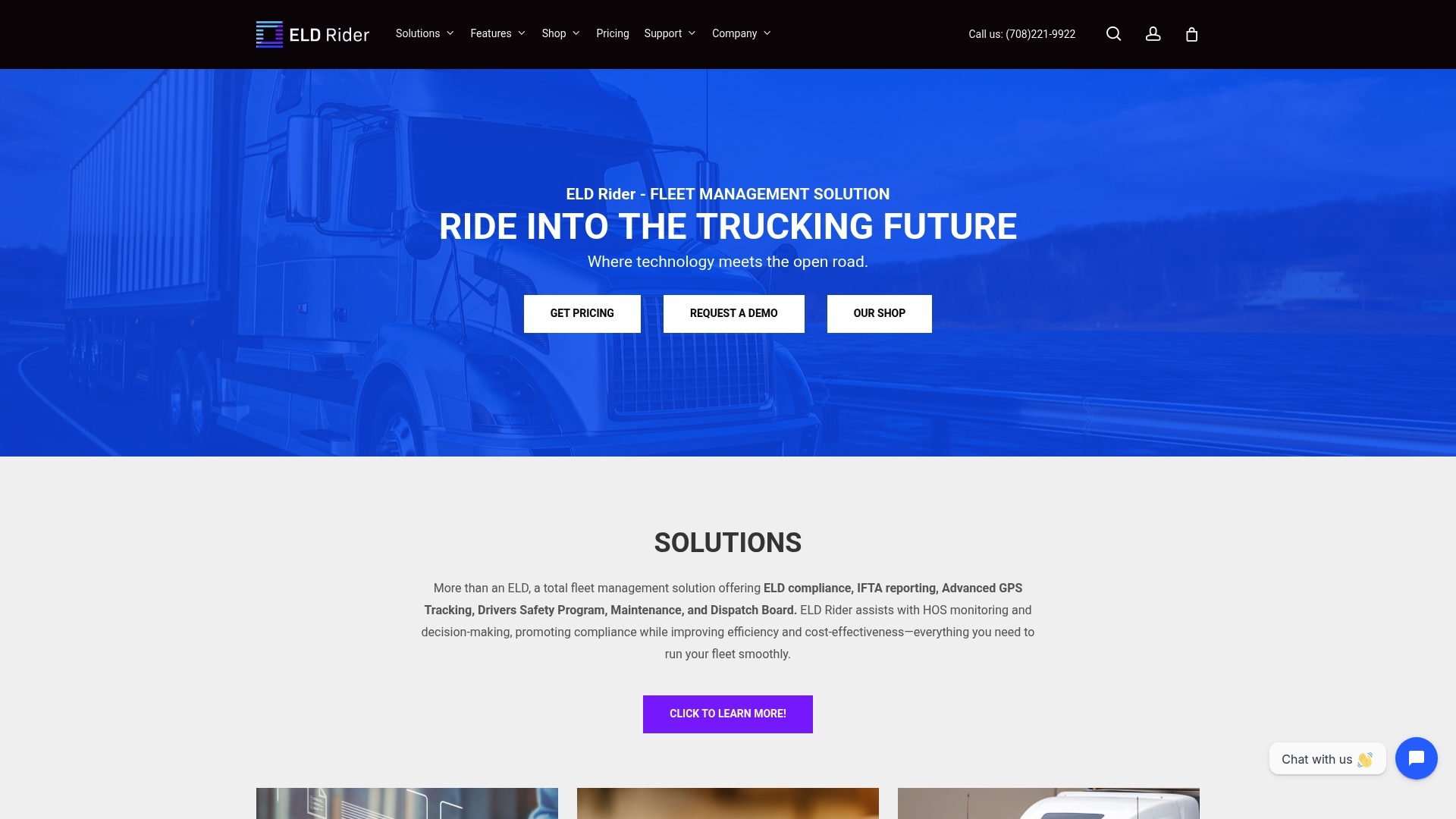
Includes an on-site product shop for ELDs, GPS units, and dashcams plus 24/7 multi-language support for fleets that need round-the-clock help. The platform combines compliance, GPS tracking, IFTA reporting, dispatch, maintenance, and safety tools into a single vendor experience.
ELDRider bundles device sales and a full software suite so you can buy ELDs, dashcams, and GPS hardware from the same vendor that runs your fleet software. That single-vendor path shortens procurement cycles and keeps support focused on a single device to software workflow. It also includes Live Share style third-party load tracking for partners.
If your operation already runs best-of-breed systems for dispatch, maintenance, and telematics and you prefer piecing best-in-class tools together, ELDRider’s single-vendor model may duplicate systems rather than replace them. Very large carriers with deep negotiated device discounts could find the per-vehicle economics less competitive.
Fleet managers, owner-operators, and logistics providers who want a single supplier for devices plus fleet software and who prioritize consolidated support and compliance features. Best for small to mid-sized fleets that prefer one contract for hardware and service.
A small trucking company uses ELDRider to record driver Hours of Service, track trucks and trailers in real time, manage loads through the dispatch screen, and schedule maintenance from diagnostic alerts. The combined setup reduced late deliveries and cut preventable roadside violations.
Variable pricing delivered via a guided product selection and vehicle count questionnaire. Buyers receive tailored quotes that bundle hardware device options with service plans rather than a fixed public per-driver rate.
Website: https://eldrider.us
Intro pre-write:
Competitor win pre-write:
Best Fit uniqueness check:
Our Pick pre-write:
{“text”:"## Comparative Insights into ELD Solutions
Selecting an Electronic Logging Device (ELD) system is for fleet managers operating within regulated environments, and each solution uniquely addresses specific operational needs.
GoELDHub excels in hardware compatibility by supporting existing PT-30 and IOSix devices. This feature ensures minor installation disturbances and eliminates additional hardware procurement costs, which is a significant advantage for small fleets wishing to minimize disruptions. In contrast, while both TFM ELD and ELDRider offer integrated hardware solutions, they require dedicated devices that might result in higher initial setup efforts.
On cost and entry barriers, RouteOne ELD offers a commendable solution with its tier that includes fundamental features free of charge, making it accessible for nascent or cost-sensitive operators. However, the no-cost tier comes with limitations compared to the tools of the other platforms. In comparison, GoELDHub provides fuel-saving initiatives and factoring tools within its offering, helping offset recurring expenses and enhancing cash flow predictability for operators.
ELDRider integrates all hardware, software, and safety tools under a unified package, which can simplify fleet operations for carriers prioritizing single-vendor solutions. Meanwhile, TFM ELD stands out for its add-on hardware variety such as camera and trailer tracking capabilities, catering to carriers requiring enhanced asset visibility. These features contrast with GoELDHub’s emphasis on streamlined service packages for smaller fleets, reflecting a more targeted approach to its user base.
For fleets prioritizing compatibility with existing hardware and aiming to minimize changeover costs, GoELDHub offers a tailored solution. Fleet managers with specialized hardware considerations or expansion requirements should consult individual platform offerings to match specific goals."} Thoughtful contrasts illustrate choice dimensions for readers accurately and compellingly.
Choose the best ELD and fleet management software to suit your operational needs by comparing these platforms below.
| Product | Key Differentiator | Best For | Pricing | Notable Limitation |
|---|---|---|---|---|
| Goeldhub | Combines ELD compliance with cost controls | Small fleets needing simple solutions | $15/month per driver | Documentation is limited for evaluation |
| TFM ELD | Includes trailer trackers and dash cameras | Regional fleets with varied logistics | $30/month per vehicle | Setup can be complex without technical help |
| RouteOne ELD | Free basic plan with optional upgrades | Cost-conscious small and growing fleets | Free basic; paid from $7.99/month | Reliability and support issues reported |
| ELDRider | All-in-one vendor for devices and software | Fleets preferring single vendor options | Variable, guided quotes | Setup can be heavy for mid-sized fleets |
Are you weighing bigroad.com alternatives to find a more cost-effective and all-in-one solution for your small or mid-sized fleet? Many fleets face frustrations like high hardware costs and fragmented services that complicate compliance and daily operations. Goeldhub simplifies this by supporting your existing PT-30 and IOSix devices, eliminating costly equipment swaps while providing FMCSA-compliant ELD logging, fuel discounts, low-fee factoring, and driver recruiting tools—all for just $15 per driver each month.
Take control and reduce your operational expenses today with Goeldhub. Sign up now for a 14-day free trial with no obligation and experience how easy it is to manage driver logs, save money on fuel, and maintain compliance without the headaches. Visit https://goeldhub.com and unlock fuel savings plus fast factoring payouts designed for very small fleets.
Goeldhub is designed specifically for very small trucking operations with one to twenty trucks, providing a low-cost ELD service at $15/month per driver. The platform supports existing PT-30 and IOSix devices, which helps avoid installation costs and downtime. Small fleet managers can confidently maintain compliance without incurring extra expenses.
TFM ELD excels by offering a range of optional hardware add-ons such as trailer trackers and dash cameras for enhanced operational visibility. Goeldhub, on the other hand, allows fleets to use their current hardware without needing replacements, which makes it a better fit for operations that want to avoid tech transition costs. This approach ensures a smooth onboarding experience while maintaining compliance.
Goeldhub charges $15 per month per driver, providing predictable costs, while RouteOne ELD offers a free basic plan with optional paid upgrades starting at $7.99 per vehicle/month. Therefore, Goeldhub might be a better option for fleets looking for straightforward compliance features under a single bill rather than piecing together different plans.
Yes, Goeldhub includes fuel discounts that can potentially save up to $2 per gallon at over 4,200 truck stops. This feature, combined with the flat factoring fee, can significantly reduce overall operating costs. Fleet managers should evaluate these savings against their existing fuel expenses to determine the financial benefits.
Goeldhub offers U.S.-based, multilingual support available around the clock, ensuring that drivers can receive immediate assistance when needed. TFM ELD also provides 24/7 customer support, but fleets may face setup complexities that require more technical assistance. Therefore, Goeldhub might be preferred by those needing reliable real-time help during operations.


.svg)