Trucking business expense tracking is the process of capturing, organizing, and categorizing every operational cost and mileage record your company generates, so your finances stay accurate and your tax filings stay clean. For small trucking companies, this is not optional bookkeeping. It is the foundation of profitability. Without it, you overpay taxes, fail audits, and lose visibility into where your money actually goes. This guide covers the records you need, the software that saves you time, the best practices that hold up under IRS scrutiny, and the fuel cost strategies that cut spending at the source.
The IRS and FMCSA do not accept estimates. Every deduction you claim on Schedule C (Form 1040) must be backed by organized receipts and a contemporaneous mileage log. “Contemporaneous” means recorded at or near the time of the trip, not reconstructed at year-end from memory or bank statements.
For IFTA compliance, the documentation bar is even higher. IFTA recordkeeping rules require you to retain detailed distance and fuel purchase records for at least four years from the filing due date. That means audits can reach back four years, and incomplete records from any quarter in that window can trigger penalties.
Here is what your records system must capture:
Organizing these into a two-tier system works well in practice. Keep a running digital folder by month, then a second folder sorted by expense category. This structure maps directly to IRS Schedule C lines and makes quarterly reviews fast.
| Expense category | IRS Schedule C line | Retention period |
|---|---|---|
| Fuel | Part II, Line 9 (Car and truck) | 4 years minimum |
| Maintenance and repairs | Part II, Line 9 | 4 years minimum |
| Insurance | Part II, Line 15 | 4 years minimum |
| Driver wages | Part II, Line 26 | 4 years minimum |
| IFTA fuel tax records | IFTA filing | 4 years from filing date |
The right software turns a pile of paper receipts into a clean, searchable expense record in minutes. Platforms like SparkReceipt use AI-powered phone scanning to capture fuel, toll, and maintenance receipts automatically, then categorize them and generate IRS-ready expense reports for around $199 per year. That is less than the cost of one hour with a CPA, and it eliminates the manual data entry that causes most categorization errors.

The bigger gain comes from consolidation. Unified expense dashboards pull data from fuel cards, payroll systems, maintenance logs, and toll accounts into one view. This eliminates manual reconciliation at month-end and gives you real-time visibility into where money is leaving the business. For a small fleet owner managing dispatch, compliance, and finances simultaneously, that visibility is the difference between reacting to cash flow problems and preventing them.
Pro Tip: Before committing to any expense software, test its export format. Your accountant or tax preparer needs clean CSV or PDF exports that map to Schedule C categories. If the software exports raw data with no category labels, you are creating extra work, not saving it.
Here is how the leading tool types compare for small trucking operations:
| Tool type | Best for | Typical cost | Key limitation |
|---|---|---|---|
| AI receipt scanners (e.g., SparkReceipt) | Solo operators and small fleets | ~$199/year | Limited telematics integration |
| Fuel card platforms (e.g., AtoB) | Fuel spend control and reporting | Varies by card program | Focused on fuel, not full P&L |
| All-in-one fleet platforms | Multi-driver fleets needing compliance + expenses | $15+/driver/month | Requires onboarding time |
| Spreadsheet templates | Micro-operators on tight budgets | Free | No automation, high error risk |
Integration with your ELD and telematics system is worth prioritizing. When mileage data flows automatically from your ELD into your expense platform, you remove the single biggest source of audit risk: manually entered mileage logs. Platforms that support existing hardware like PT-30 and IOSix devices let you connect without buying new equipment. You can also explore cash flow improvement strategies that pair well with tighter expense visibility.
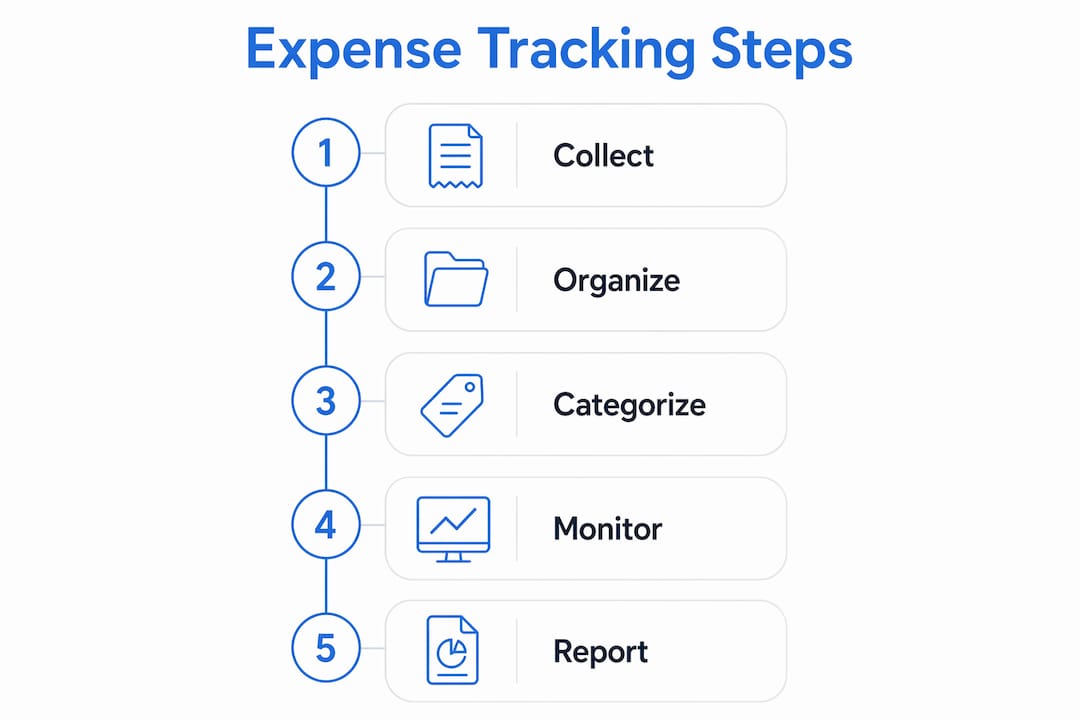
Consistency beats perfection. A system you use every week produces better records than a perfect system you use twice a year. Weekly tracking routines, whether in a spreadsheet or dedicated software, are the single most recommended habit among experienced trucking operators.
Here is a practical weekly routine that works for small fleets:
Splitting your costs into fixed and variable categories gives you a clearer picture of your true operating margin. Fixed costs include truck payments, insurance premiums, and base permits. Variable costs include fuel, driver pay per mile, tolls, and maintenance tied to mileage. When you separate them, you can calculate your break-even rate per mile accurately, which is the number every load decision should be measured against.
Pro Tip: Align your expense categories to IRS Schedule C lines from day one. If your software uses generic labels like “transportation” or “other,” rename them to match Schedule C. This saves hours at tax time and makes your records audit-ready without any reformatting.
Quarterly self-audits are the habit that separates operators who breeze through IRS reviews from those who scramble. Set aside two hours every quarter to check that every expense has a receipt, every mileage entry has a business purpose, and your IFTA records are complete. Record completeness matters as much as record accuracy. An auditor who finds a four-year-old gap in your fuel records will look harder at everything else.
Fuel is typically the largest variable cost in any trucking operation, and it is also the most controllable with the right tools. Fuel-planning platforms like OptiMile Pro can reduce fuel costs by 11 to 17% by optimizing where and when drivers stop to fill up, cutting planning time from hours to seconds. That range represents real money on a fleet running 100,000 miles per year.
Effective fuel cost tracking goes beyond just saving receipts. Here is what a complete fuel tracking system covers:
Integrating your fuel card data with your IFTA records is where most small operators leave money on the table. When fuel purchases are automatically tagged by state and vehicle, your IFTA quarterly filing becomes a data export rather than a manual calculation. Goeldhub’s fuel card program includes negotiated discounts and reporting that feeds directly into compliance workflows. For more on cutting fuel spend at the operational level, the fuel cost management guide covers route-level strategies in detail.
The most expensive mistake in trucking financial tracking is not a software failure. It is delayed mileage logging. Postponing mileage entry until year-end dramatically increases IRS audit exposure because reconstructed logs lack the credibility of contemporaneous records. The IRS can and does disallow vehicle deductions entirely when logs appear to have been created after the fact.
“Expense tracking should align categories with tax reporting and deduction substantiation, not just receipt collection.” — Trucking Company Bookkeeping Guide
Other common mistakes that cost small operators money and time:
The fix for most of these mistakes is the same: pick one system, use it every week, and make sure it exports data in a format your accountant can use without reformatting.
Consistent, categorized, and digitally captured expense records are the foundation of profitable and audit-ready trucking operations.
| Point | Details |
|---|---|
| Document everything contemporaneously | Record mileage and receipts at the time of the trip to satisfy IRS and IFTA audit standards. |
| Align categories to Schedule C | Map expense labels to IRS Schedule C lines from day one to cut tax preparation time significantly. |
| Use consolidated dashboards | Integrating fuel, payroll, and maintenance data into one platform eliminates manual reconciliation errors. |
| Optimize fuel tracking separately | Track miles per gallon by vehicle and route; fuel-planning tools can cut fuel spend by 11 to 17%. |
| Retain records for four years | IFTA audits reach back four years, so complete records from every quarter in that window are required. |
Most small trucking operators I have worked with are not failing at expense tracking because they lack discipline. They are failing because they started with the wrong system. Someone handed them a spreadsheet template in year one, and they are still using it in year five with three trucks and two drivers. The spreadsheet cannot flag a missing IFTA receipt field. It cannot match a fuel card transaction to a mileage log automatically. It cannot tell you that one of your trucks is burning 12% more fuel per mile than it did six months ago.
The operators who get this right share one habit: they treat expense tracking as a weekly operational task, not an annual accounting task. They do not wait for tax season to find out their records are incomplete. They know their cost per mile by route, by driver, and by vehicle because they look at it every week. That number drives every load decision they make.
The other thing I have seen consistently is that user-friendly software gets used, and complex software gets abandoned. A platform that requires 20 minutes of training to capture a receipt will not be used by a driver who just finished a 600-mile run. The best trucking expense software is the one your drivers will actually open. Simplicity is not a compromise. It is a requirement.
Tighter expense visibility also connects directly to cash flow. When you know your exact cost per mile, you stop accepting loads that do not cover your costs. That single change, made possible by accurate tracking, is often worth more than any tax deduction.
— Managment
Goeldhub’s all-in-one platform gives small trucking companies the tools to turn scattered receipts and mileage logs into clean, compliant financial records. The platform connects ELD compliance, fuel card programs with negotiated discounts, and driver log management in one place, so your expense data flows automatically instead of sitting in a shoebox. For $15 per driver per month, you get access to the full platform plus partner services designed to cut costs on fuel, factoring, and daily operations. There is no obligation to start. Explore Goeldhub’s ELD compliance and expense tools and see how consolidating your fleet data changes what you can see and control.
You need organized receipts and a contemporaneous mileage log for every vehicle expense claimed on Schedule C (Form 1040). Records must show date, amount, business purpose, and vehicle details to withstand IRS review.
IFTA requires you to retain distance and fuel purchase records for at least four years from the filing due date. Records must include the date, seller, gallons purchased, and vehicle unit number for each transaction.
The best choice depends on fleet size. SparkReceipt works well for solo operators at around $199 per year, while all-in-one platforms like Goeldhub suit multi-driver fleets that need ELD compliance and expense tracking in one system.
Reconstructing mileage logs at year-end significantly increases IRS audit risk because the records lack the credibility of contemporaneous entries. The IRS can disallow vehicle deductions entirely when logs appear to have been created after the fact.
Fuel-planning platforms like OptiMile Pro can reduce fleet fuel costs by 11 to 17% by optimizing stop locations and fuel quantities. On a fleet running high annual mileage, that range translates to thousands of dollars per truck per year.


.svg)